

The 40th Annual AAAI Conference on Artificial Intelligence
January 20 – January 27, 2026 | Singapore

AAAI-26/IAAI-26/EAAI-26 Invited Speakers
Sponsored by the Association for the Advancement of Artificial Intelligence
January 22 – January 25, 2025 | Hall 1 | Singapore EXPO, Singapore
Thursday, January 22
8:30AM – 9:25AM
Welcome, Opening Remarks, AAAI Awards, and Conference Awards
Download ‘Opening Ceremony‘ slides (PDF)
2:00PM – 2:55PM
AAAI Invited Talk
From How to learn to What to learn in Multiagent Systems and Robotics, Peter Stone
5:35PM – 6:30PM
AAAI Invited Talk
Quest of AI towards Specializable Generalist: From Reasoning to Scientific Discovery, Bowen Zhou
Friday, January 23
8:30AM – 9:25AM
AAAI Invited Talk
Fundamental physics and science communication, Daniel Whiteson
2:00PM – 2:55PM
AAAI Invited Talk
From Workflows to Water Coolers: AI That Can Navigate Human Nature, Yolanda Gil
4:30PM – 5:30PM
5:35PM – 6:30PM
AAAI Invited Talk
Towards Embodied Agents that See, Simulate, and Reason, Katerina Fragkiadaki
Saturday, January 24
8:30AM – 9:25AM
AAAI Panel
AI and Program Reviewing Panel
Download ‘The AAAI-2026 AI-Assisted Peer Review Pilot Program‘ slides (PDF).
2:00PM – 2:55PM
AAAI / IAAI Invited Talk
Navigating the AI Horizon: Promises, Perils, and the Power of Collaboration, Ece Kamar
4:30PM – 6:30PM
Robert S. Engelmore Memorial Lecture Award
AI for Reskilling, Upskilling, and Workforce Development, Ashok Goel
AAAI Invited Talk
Professor Edward Feigenbaum: A Tribute to and Lecture by a Pioneer of AI on his 90th Birthday
Sunday, January 25
8:30AM – 9:25AM
Patrick Henry Winston Outstanding Educator Award
The Essence of Intelligence is Appropriate Action (not thinking, reasoning, learning or language) and other things every student of AI should know, Alan Mackworth and David Poole
2:00PM – 2:55PM
AAAI Invited Talk
Small Data: A New Paradigm for the Next Generation of AI, Derek Haoyang Li
AAAI Invited Talk
From How to learn to What to learn in Multiagent Systems and Robotics
Peter Stone
There has been a lot of exciting recent progress on new and powerful machine learning algorithms and architectures: how to learn. But for autonomous agents acting in the dynamic, uncertain world, it is at least as important to be able to identify which concepts and subproblems to focus on: what to learn.
This talk presents methods for identifying what to learn within the framework of reinforcement learning, focusing especially on applications in multiagent systems and robotics.
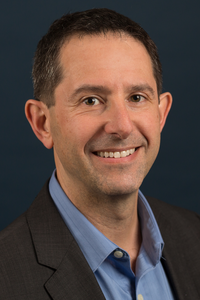
Dr. Peter Stone holds the Truchard Foundation Chair in Computer Science at the University of Texas at Austin. He is Chair of the Computer Science Department, as well as Founding Director of Texas Robotics. In 2013 he was awarded the University of Texas System Regents’ Outstanding Teaching Award and in 2014 he was inducted into the UT Austin Academy of Distinguished Teachers, earning him the title of University Distinguished Teaching Professor. Professor Stone’s research interests in Artificial Intelligence include machine learning (especially reinforcement learning), multiagent systems, and robotics. Professor Stone received his Ph.D in Computer Science in 1998 from Carnegie Mellon University. From 1999 to 2002 he was a Senior Technical Staff Member in the Artificial Intelligence Principles Research Department at AT&T Labs – Research. He is an Alfred P. Sloan Research Fellow, Guggenheim Fellow, AAAI Fellow, IEEE Fellow, AAAS Fellow, ACM Fellow, Fulbright Scholar, and 2004 ONR Young Investigator. In 2007 he received the prestigious IJCAI Computers and Thought Award, given biannually to the top AI researcher under the age of 35, in 2016 he was awarded the ACM/SIGAI Autonomous Agents Research Award, and in 2024 he was awarded the ACM/AAAI Allen Newell Award. Professor Stone co-founded Cogitai, Inc., a startup company focused on continual learning, in 2015, and currently serves as Chief Scientist of Sony AI.
AAAI Invited Talk
Quest of AI towards Specializable Generalist: From Reasoning to Scientific Discovery
Bowen Zhou
The pursuit of high-efficiency Artificial General Intelligence (AGI) requires more than brute-force scaling of model size and data. While scaling remains a key driver of capability, equally important are scalable architectural and principles—designs that continue to work, improve, and remain controllable as we vary model scale, domains, and modalities. Central to our approach is the concept of the “Specialized Generalist” – a pathway that achieves deep expertise across multiple domains without sacrificing broad generalization capabilities. In this talk, we introduce the “Specialized Generalist” paradigm and our implementation of it, SAGE (Synergistic Architecture for Generalized Expertise), a three-layer architecture designed to balance specialization and generalization in a systematic way. We will describe how SAGE’s Base Model, Synergy Fusion, and Exploration-Evolution layers interact in practice, focusing on concrete mechanisms for coordinating domain-specific expertise with broad general reasoning. We will share empirical results and recent advances in large reasoning models, embodied AI, and scientific applications to further illustrate the approach. A central motivation is to support “AGI for Science” by building a stable plateau of capabilities that can reliably assist with complex scientific workflows rather than isolated demos. Finally, we will outline the safety and governance questions that arise when deploying Specialized Generalist systems in high-impact settings, and discuss what we have learned so far about monitoring, alignment, and operational safeguards.
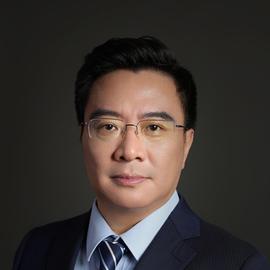
Bowen ZHOU, the Director and Chief Scientist of Shanghai Artificial Intelligence Laboratory, Huiyan Chair Professor at Tsinghua University and Tenured Professor of the Department of Electronic Engineering, IEEE/CAAI Fellow. Prior to that, he was the Director of AI Foundations of IBM T.J. Watson Research Center, Chief Scientist of IBM Watson Group, a Distinguished Engineer of IBM, SVP of JD.com, the Chairman of JD.com’s Technology Committee, and the President of JD Cloud & AI.
AAAI Invited Talk
Fundamental Physics and Science Communication
Daniel Whiteson
Physicists aim to explain the Universe in terms of a compact, interpretable set of principles. Deducing those principles from experiments poses many challenging and problems which are ripe for application of AI and present opportunities to develop new AI techniques. I will describe how AI has changed the way particle physicists work and speculate about the role of AI in the future of fundamental physics. Finally, I will describe my experience in science communication, as an author, podcaster and television producer.

Daniel Whiteson is a particle physicist and a pioneer of developing novel machine learning for fundamental physics. He is an experienced science communicator, co-host of the podcast “Daniel And Kelly’s Extraordinary Universe” and author of the recent non-fiction book “Do Aliens Speak Physics?”
AAAI Invited Talk
From Workflows to Water Coolers: AI That Can Navigate Human Nature
Yolanda Gil
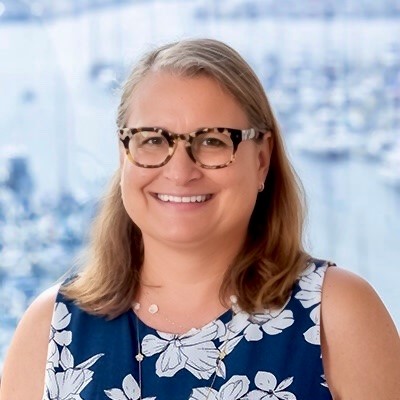
Dr. Yolanda Gil is a Fellow at the Information Sciences Institute of the University of Southern California, where she serves as Senior Director of AI and Data Science Initiatives and Director of the Center on Artificial Intelligence for Health. She is also a Research Professor in Computer Science and in Spatial Sciences. She received her M.S. and Ph.D. degrees in Computer Science from Carnegie Mellon University, with a focus on artificial intelligence and cognitive science. Dr. Gil collaborates with scientists in many domains on semantic workflows and metadata capture, social knowledge collection, provenance and trust, task-centered collaboration, and automated discovery. In 2019 she co-chaired the CRA/AAAI 20-Year Artificial Intelligence Research Roadmap for the US with key strategic recommendations based on extensive community contributions. She initiated and led the W3C Provenance Group that led to a widely-used standard that provides the foundations for trust on the Web. She is a Fellow of the Association for Computing Machinery (ACM), the Association for the Advancement of Science (AAAS), the Institute of Electrical and Electronics Engineers (IEEE), and the Cognitive Science Society (CSS). She is also Fellow of the Association for the Advancement of Artificial Intelligence (AAAI), and served as its 24th President. Gil was the first computer scientist to receive the Geological Society of America (GSA) M Lee Allison Award for Outstanding Contributions to Geoinformatics and Data Science. She serves as Co-Chair of the Stanford AI Index. In 2024, Gil was appointed to the National Science Board (NSB) for a 6 year term by President Biden.
Presidential Panel
The Future of AI
Moderator: Stephen Smith, Current AAAI President
Panelists: Raj Reddy, AAAI President (1987-1989), Eric Horvitz, AAAI President (2007-2009) Manuela Veloso, AAAI President (2012-2014) Bart Selman, AAAI President (2020-2022)
Over the past few years, Artificial Intelligence has bounded into the mainstream of society. Remarkable technical achievements in the use of Deep Learning and Large Language Models have given rise to expectations and hype regarding the possibility of achieving artificial general intelligence, as well as general concerns over the potential deleterious consequences of emerging AI technologies and how to ensure their responsible use. In this panel we engage four Past AAAI Presidents to discuss their views on questions relating to the current state and future of AI research, including such topics as important emerging application areas, current technical challenges, the eventual prospects for achieving artificial general intelligence, and potential AI risks and solutions.

Stephen Smith’s research interests are in artificial intelligence, primarily in the areas of constraint-based search and optimization, automated planning and scheduling, configurable and adaptive problem solving systems, multi-agent and multi-robot coordination, mixed-initiative decision-making, and naturally inspired search procedures. One integrating focus has been the development of core technologies for coordination and control of large-scale, multi-actor systems, and their application to domains spanning transportation, manufacturing, logistics, mission planning, and energy systems.
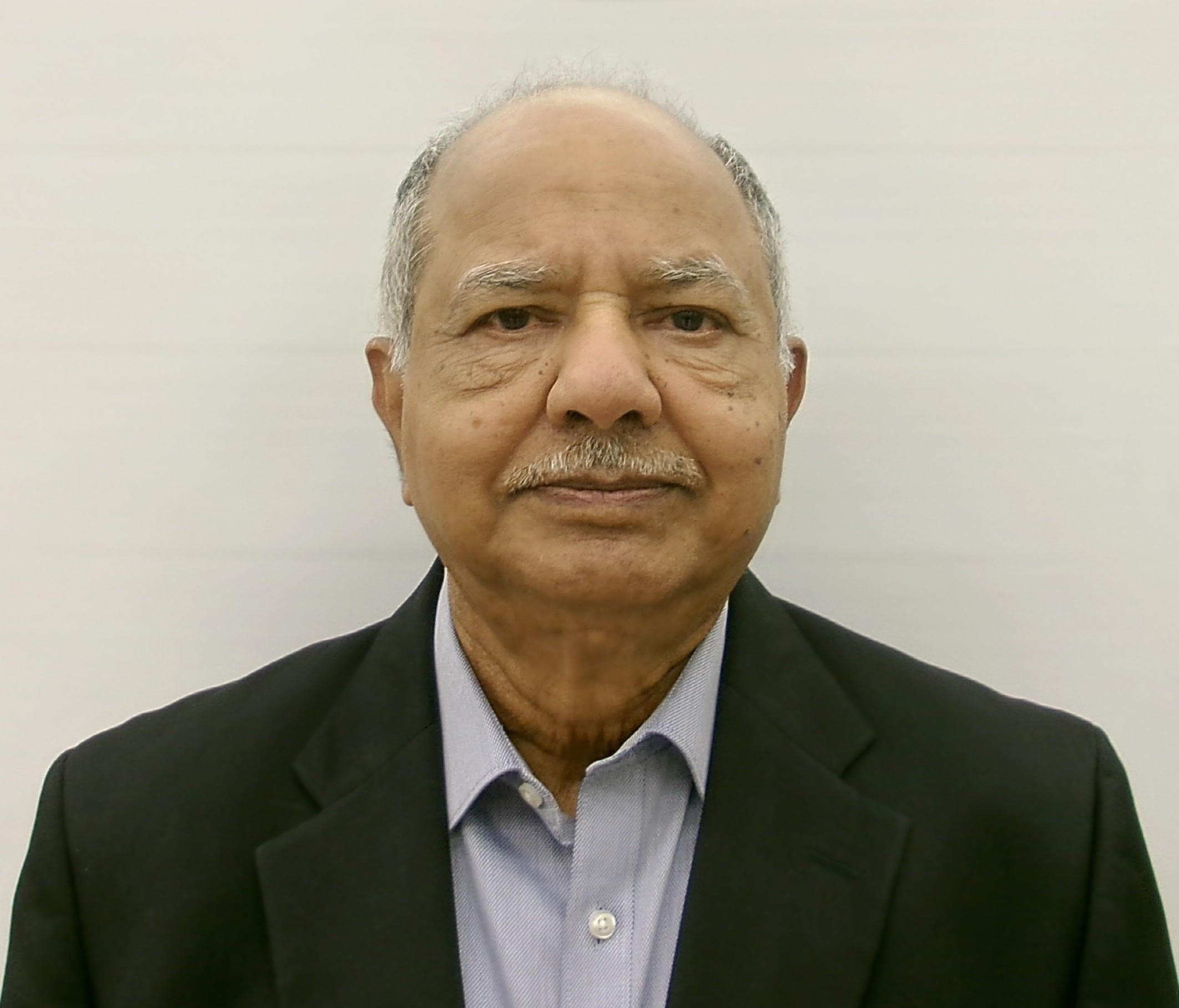
Raj Reddy is a University Professor of Computer Science and Robotics and Moza Bint Nasser Chair in the School of Computer Science at Carnegie Mellon University, where he served as the founding Director of the Robotics Institute and as the Dean of the School of Computer Science. He served as co-chair of the President’s Information Technology Advisory Committee and has been awarded 13 honorary doctorates. Dr. Reddy is the recipient of the Legion of Honor, Padma Bhushan, Okawa Prize, Honda Prize, Vannevar Bush Award, and the 1994 Turing Award (jointly with Edward Feigenbaum) “for pioneering the design and construction of large scale artificial intelligence systems, demonstrating the practical importance and potential commercial impact of artificial intelligence technology.”

Eric Horvitz is Microsoft’s Chief Scientific Officer and Director Emeritus of Microsoft Research. He leads strategic initiatives at the intersection of science, technology, and society, with a focus on artificial intelligence, biosciences, and healthcare. His research has been recognized with the AAAI/ACM Allen Newell Prize and the Feigenbaum Prize for fundamental contributions to AI, as well as induction into the CHI Academy for his work in human-AI collaboration. Eric served as AAAI President from 2007 to 2009. He themed his term ‘AI in the Open World,’ articulating a vision for the technical innovations and societal studies and considerations required as AI moved into real-world, high-stakes applications. He is a member of the National Academy of Engineering and the American Academy of Arts and Sciences, and is a Fellow of AAAI, ACM, AAAS, and the American College of Medical Informatics. Beyond his research leadership, Eric co-founded the Partnership on AI and Stanford’s One Hundred Year Study on AI. He received both his PhD and MD from Stanford University.

Manuela M. Veloso, Ph.D., Managing Director, Head, JPMorganChase AI Research, Herbert A. Simon University Professor Emerita, School of Computer Science, Carnegie Mellon University
Manuela Veloso is the Head of JPMorganChase AI Research & Herbert A. Simon University Professor Emerita at Carnegie Mellon University, where she was faculty in the Computer Science Department and then Head of the Machine Learning Department.
Veloso has a licenciatura degree in Electrical Engineering and an M.Sc. in Electrical and Computer Engineering from Instituto Superior Técnico, Lisbon, an M.A. in Computer Science from Boston University, and a PhD in Computer Science from Carnegie Mellon University. Veloso has Doctorate Honoris Causa degrees from the Örebro University, Sweden, the Instituto Universitário de Lisboa (ISCTE), Portugal, the Université de Bordeaux, France, and the Universidade Católica of Portugal.
She served as president of the Association for the Advancement of Artificial Intelligence (AAAI), and she is co-founder and a Past President of the RoboCup Federation. She is a fellow of AAAI, IEEE, AAAS, and ACM. She is the recipient of the ACM/SIGART Autonomous Agents Research Award, the Einstein Chair of the Chinese Academy of Sciences, an NSF Career Award, and the Allen Newell Medal for Excellence in Research. Veloso is a member of the National Academy of Engineering and a member of the Academy of Sciences of Portugal.
Her research interests are in AI, including Multiagent Systems, Autonomous Robots, Continual Learning Agents, and AI in Finance. For further details, see www.cs.cmu.edu/~mmv.

Bart Selman is a professor of computer science at Cornell University. Previously, he was at AT&T Bell Laboratories. His research interests include computational sustainability, efficient reasoning procedures, planning, knowledge representation, and connections between computer science and statistical physics. He has (co-)authored more than 100 publications, including six best paper awards. His papers have appeared in venues spanning Nature, Science, Proceedings of the National Academy of Sciences, and a variety of conferences and journals in AI and computer science. He has received the Cornell Stephen Miles Excellence in Teaching Award, the Cornell Outstanding Educator Award, an NSF Career Award, and an Alfred P. Sloan Research Fellowship. He is a Fellow of the American Association for Artificial Intelligence and a Fellow of the American Association for the Advancement of Science.
AAAI Invited Talk
Towards Embodied Agents that See, Simulate, and Reason
Katerina Fragkiadaki
Large language models have revolutionized textual reasoning, yet their ability to act meaningfully in multimodal, real-world environments remains limited. They struggle to ground their decisions in visual context, adapt to changing goals, and plan actions over time—shortcomings that stem from a lack of structured, goal-driven reasoning and insufficient representations of the physical world.
In this talk, I present a unified framework for building embodied agents that can see, simulate, and reason. I begin by introducing methods for learning world simulators from data, arguing that visual reasoning—like textual reasoning—benefits from step-by-step processing. Inverting a physics simulator becomes key: agents must infer structured 3D neural representations of objects, parts, motions, and scenes directly from raw video. I describe methods for extracting such representations using generative priors, injecting them into vision-language models (VLMs), and scaling up their supervision via generative 3D simulation and fast, modular physics engines. These simulators enable agents to anchor their predictions in grounded physical reality, reducing hallucinations and improving control.
Complementing this simulation capability, I explore techniques that enable agents to reason over time and adapt their behavior. By integrating structured memory systems, agents learn to retain and retrieve relevant experiences to inform long-horizon plans. Language-based reflective feedback allows them to refine their strategies beyond what sparse rewards offer, forming abstractions that generalize across tasks. When trained to ground their reasoning directly in the visual environment, agents gain the ability to set subgoals, explore effectively, and verify their own hypotheses.
Together, these advances point toward autonomous systems that simulate before they act, reflect after they fail, and maintain an ongoing awareness of goals, constraints, and context. I will illustrate these capabilities across web automation, robotics, and interactive assistance, showing how agents that see, simulate, and reason offer a promising path toward general-purpose embodied intelligence.

Katerina Fragkiadaki is the JPMorgan Chase Associate Professor in the Machine Learning Department at Carnegie Mellon University. She received her undergraduate degree in Electrical and Computer Engineering from the National Technical University of Athens, and her Ph.D. from the University of Pennsylvania. She subsequently held postdoctoral positions at UC Berkeley and Google Research. Her research focuses on enabling few-shot and continual learning for perception, action, and language grounding. Her work has been recognizedby the Best Ph.D. Thesis Award, NSF CAREER Award, AFOSR and DARPA Young Investigator Awards, as well as faculty research awards from Google, Toyota Research Institute, Amazon, NVIDIA, UPMC, and Sony. She served as a Program Chair for ICLR 2024.
AAAI Invited Talk
AI in science and technology: the future in our hands
Isabelle Guyon
Artificial intelligence could, in the next few years, fundamentally reshape research, invention, and technical progress, moving from the limitations of human-scale discovery to an era of AI-assisted creation. The year 2025 has been marked by breath-taking scientific advances accelerated by AI in many areas, including in biology, physics, chemistry, material science, and medicine. AI is no longer used only as a discovery tool, it is embedded in agents enrolled in the scientific process itself, which can manage end-to-end scientific workflows. This includes systems that generate novel hypotheses from existing literature, design verifiable experiments, automate the validation and peer-review process to check for rigor and conflicts, and even propose corrections, fundamentally restructuring the verification and publication cycle.
To ensure these AI agents act as “good scientists,” we must define their incentives. The challenge is to create a reward structure that values not just predictive accuracy, but also novelty, utility, and—most critically—reproducibility. We must design mechanisms that incentivize AI to not only find an answer, but to find the most robust, verifiable, and generalizable one. This incentive structure is shadowed by a critical conflict: the risk of AI as a “mirror of human bias,” amplifying our past systemic errors and our “cherry picking” of good-looking results. The central question of AI in science might be less what AI might do to us than what we should demand of it.
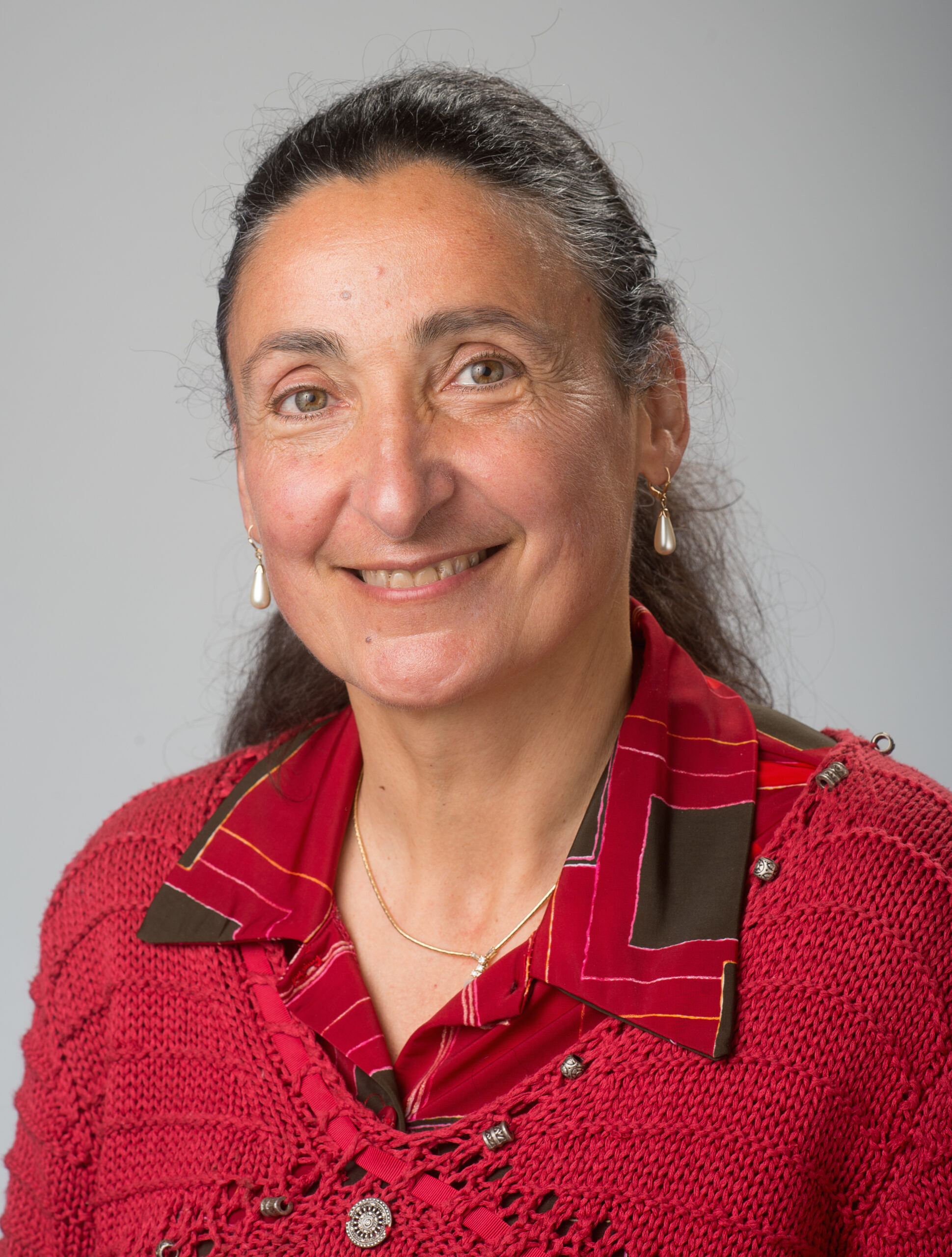
Isabelle Guyon is a Director and Research Scientist at Google, on leave from her position as a Professor of Artificial Intelligence at Université Paris-Saclay. Her work sits at the frontier between data-centric AI, statistical data analysis, pattern recognition, and machine learning, with expertise spanning areas like computer vision, bioinformatics, high-energy physics, and power systems. Her recent interests include meta-learning, causal discovery, AI fairness and safety, and Generative AI.
During her time at AT&T Bell Laboratories in the 1990’s, she collaborated with Yann LeCun and Yoshua Bengio, pioneering early applications of neural networks to pen-computer interfaces. She co-invented the Support Vector Machine (SVM) with Bernhard Boser and Vladimir Vapnik.
Besides her research contributions, she organized numerous Machine Learning Challenges since 2003. She co-founded in 2011 ChaLearn, a non-for-profit organization dedicated to organizing challenges.
She is a recipient of the 2020 BBVA Frontiers in Research Award and a member of the French Academy of Technologies since 2024.
She has been long serving the community as reviewer, editor of journals, workshop and conference organizer, including Action Editor at JMLR for 20 years and program chair of NIPS 2016. This has raised her interest in reproducible science and improving the peer-review process using AI, one of her current topics of research.
AI and Program Reviewing Panel
Panelists: Joydeep Biswas, Sheila Schoepp, Gautham Vasan, Anthony Opipari, Arthur Zhang, Zichao Hu Chad Jenkins, Matt Taylor, Peter Stone, Kiri Wagstaff, Matt Lease
When you appoint a group of AI experts to run a conference, and then that conference experiences unprecedented growth that makes it impossible to continue with business as usual, what do they do? Build a bunch of custom AI tools, of course.
Download ‘The AAAI-2026 AI-Assisted Peer Review Pilot Program‘ slides (PDF).
AAAI Invited Talk
Navigating the AI Horizon: Promises, Perils, and the Power of Collaboration
Ece Kamar, PhD
We stand at the dawn of the AI era, a technological revolution poised to be the most consequential of our generation, presenting both unprecedented opportunities and profound challenges. But this promise is shadowed by significant challenges. To build a future we want, we must move beyond the hype and the headlines to confront the most pressing open problems—technical, sociotechnical, and multidisciplinary. This talk will review the rapid progress, dissect challenges ahead, and argue that our greatest task isn’t simply building smarter machines, but fostering the human wisdom to guide them towards a future that is not only intelligent but also equitable, safe, and profoundly human.

Ece Kamar is Distinguished Scientist, Corporate Vice President and the Managing Director of the AI Frontiers Lab at Microsoft Research. She leads research and development towards pushing the frontiers of AI capabilities. Releases from her lab includes Phi family of models and libraries to empower agentic work, including AutoGen, MagenticOne and MagenticUI. Ece has a decade of experience studying the impact of AI on society and developing AI systems that are reliable, unbiased and trustworthy. She has been instrumental in building the Responsible AI efforts inside Microsoft. She serves as Technical Advisor for Microsoft’s Internal Committee on AI, Engineering and Ethics. Ece received a Bachelor of Science in Computer Engineering from Sabanci University in Istanbul. She completed her PhD at Harvard University, where she has worked with Prof. Barbara Grosz on human-AI collaboration. Ece is an Affiliate Faculty in the Department of Computer Science and Engineering at the University of Washington and is an Adjunct Faculty at Sabanci University. She was a member of the first study panel of Stanford’s AI100. She is currently serving on the National Academies’ Computer Science and Telecommunications Board (CSTB). She has been on the organizing committees of top AI and HCI conferences and received multiple best paper awards for her work.
AAAI Robert S. Engelmore Memorial Lecture Award
AI for Reskilling, Upskilling, and Workforce Development
Ashok Goel
As AI becomes increasingly powerful and ubiquitous, it is disrupting skills and displacing workers. NSF’s National AI Institute for Adult Learning and Online Education (AI-ALOE) posits that AI can be part of the solution to the growing problem if we can use AI for reskilling, upskilling, and workforce development at scale. The long-term vision of AI-ALOE is to develop and use AI technologies to enhance the proficiency of online education for all adult learners, using in-person education as a benchmark. The day-to-day mission of AI-ALOE is to conduct responsible research into AI that is grounded in theories of human cognition and learning and derived from the scientific process of learning engineering. I will describe ongoing research at AI-ALOE.
Ashok Goel is a Professor of Computer Science and Human-Centered Computing in the School of Interactive Computing at Georgia Institute of Technology, and the Chief Scientist with Georgia Tech’s Center for 21st Century Universities. He is a Fellow of AAAI and the Cognitive Science Society, an Editor Emeritus of AAAI’s AI Magazine, and a recipient of multiple IBM Faculty Awards and AAAI’s Outstanding AI Educator Award as well as Distinguished Service Award. Ashok is the PI and Executive Director of NSF’s National AI Institute for Adult Learning and Online Education (aialoe.org) headquartered at Georgia Tech. He is the Founder of Beyond Question AI, LLC.
AAAI Invited Talk
Professor Edward Feigenbaum: A Tribute to and Lecture by a Pioneer of AI on his 90th Birthday
Moderated by Peter Friedland and Bart Selman
In this session we celebrate the 90th birthday of a true pioneer of AI, Professor
Edward Feigenbaum of Stanford University. You will hear tributes live and via video from some of his many distinguished colleagues and students. In addition,
Professor Feigenbaum will deliver a plenary lecture on the past, present, and future of AI entitled: “1956 to 2026: Highlights (and Advice) from 70 Years of
Navigating the AI Spectrum.”
Patrick Henry Winston Outstanding Educator Award
The Essence of Intelligence is Appropriate Action (not thinking, reasoning, learning or language) and other things every student of AI should know
Alan Mackworth and David Poole
An agent acts in its world to achieve its objectives. Intelligence allows the agent to make decisions and act. In natural domains, sensing is limited, so acting is gambling. It’s a myth that passive learning and more data are all we need. An agent cannot learn from observations alone. It needs a real body to carry out experiments in its world, testing hypotheses, to determine causation, refining its model of the world’s dynamics. The agent is acting as a scientist: refining its model through experiments and acting appropriately to achieve its objectives. Its objectives depend on its preferences and values, and those of other agents its actions impact. Determining which values to use, and how preferences can be acquired fairly, is a major non-technical challenge. We address three primary questions: What should an agent believe? What should an agent do, given its beliefs, preferences, and abilities? What should the preferences of an agent be? Integrating these issues motivates the design of our latest AI textbook, Artificial Intelligence: Foundations of Computational Agents, (3rd Ed. 2023).
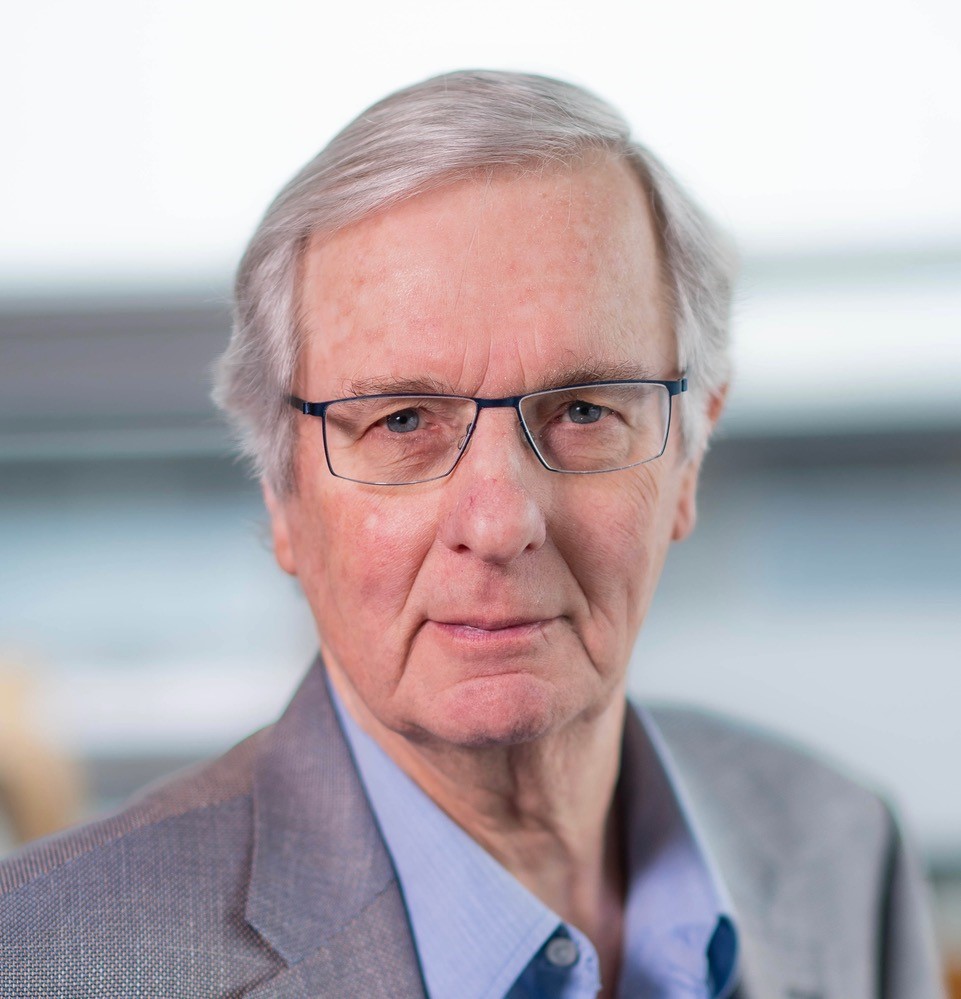
Alan Mackworth is a Professor Emeritus of Computer Science at the University of British Columbia. He works on artificial intelligence with applications in constraint satisfaction, cognitive robotics, assistive technology, hybrid systems and constraint-based agents. He invented the world’s first soccer-playing robots. He has co-authored two books: Computational Intelligence: A Logical Approach (1998) and Artificial Intelligence: Foundations of Computational Agents (2023, 3rd Ed.). Alan co-founded the UBC Cognitive Systems Program, the Centre for AI, Decision-making and Action (CAIDA) and the AI network of BC (AInBC). He has served as President of AAAI, IJCAI and CAIAC. He is a Fellow of AAAI, CAIAC, AGE-WELL, CIFAR and the Royal Society of Canada.
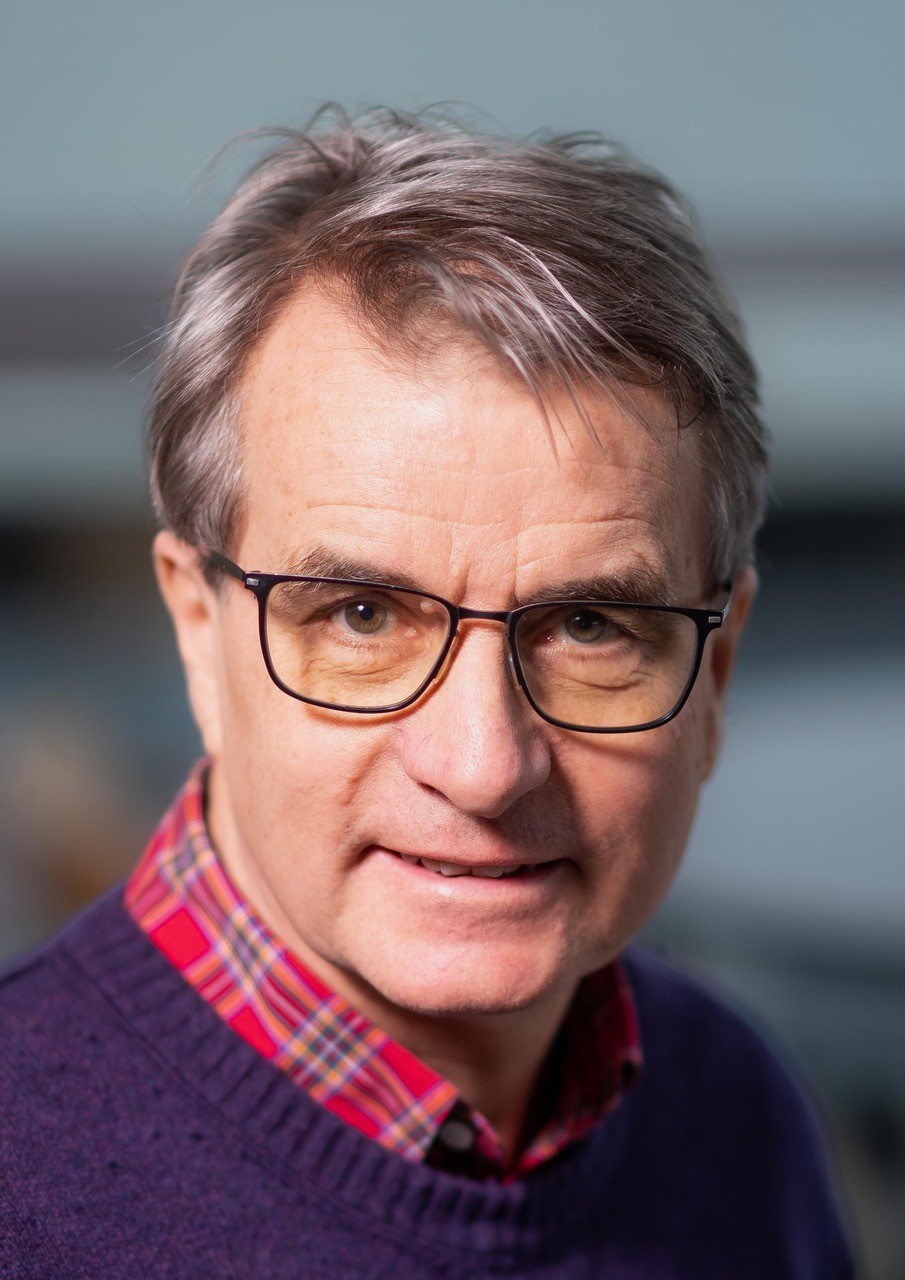
David Poole is a Professor Emeritus of Computer Science at the University of British Columbia. He is known for his work on combining logic and probability, probabilistic inference, relational probabilistic models, statistical relational AI and semantic science. He is a co-author of two AI textbooks (Cambridge University Press, 3rd edition 2023, and Oxford University Press, 1998), and co-author of ” Statistical Relational Artificial Intelligence: Logic, Probability, and Computation”. He is a former chair of the Association for Uncertainty in Artificial Intelligence, the winner of the Canadian AI Association (CAIAC) 2013 Lifetime Achievement Award, and is a Fellow of the Association for the Advancement Artificial Intelligence (AAAI) and CAIAC.
AAAI Invited Talk
Small Data: A New Paradigm for the Next Generation of AI
Derek Haoyang Li

Derek Haoyang Li is the Founder/Chairman and Chief Education Technology Scientist at Squirrel Ai Learning, a top AI-Unicorn from China. Derek is the Chair of the IEEE Standard Group for LLM Agents for AI-powered Education.
As a serial entrepreneur, Derek co-founded two publicly-listed companies. One of the companies had a market cap of $200 million. Squirrel Ai Learning is the leading AI and education innovator and unicorn at the forefront of the K-12 AI revolution. Squirrel Ai launched the world’s first LAM (Large Adaptive Model) engine in 2024.
Derek created several ingenious educational innovations: “Concepts on Nano-scaled knowledge Components”, “AI-Model-Adapted Learning-Skills-Decomposition Methods”, “Reconstructing Knowledge Space Theory (KST) with Students’ Reasons for Mistakes”, “Algorithms on Calculating the Relevance of Probability between Non-relevant Knowledge Components.”
Derek was featured as the cover story in Forbes China magazine and interviewed in 2024. He has also been interviewed by well-known media outlets such as The Wall Street Journal, MIT Technology Review, The Guardian, and has given lectures and talks multiple times at Harvard, Stanford, UCLA, and etc.